The onset of 2024 ushered in turbulence within the agriculture sector across Europe, with an unprecedented wave of protests. Hundreds of thousands of farmers flooded the streets, delivering a resounding message to policymakers both at home and within the European Union.
Why are European farmers protesting?
Farmers throughout the European Union, including those in countries like Spain, Germany, France, Belgium, Italy, and Greece, organised a storm of protests, spurred by a complex web of economic pressures, environmental regulations, and global trade dynamics. Malta has also recently witnessed significant protest activity, with the largest farming protest in decades taking place just a couple of days ago. This demonstrates the growing importance of Malta in discussions about agricultural issues within the European Union. At the heart of their grievances are soaring production costs, which have surged in the wake of geopolitical upheavals, including Russia’s invasion of Ukraine. These increased costs, spanning energy, fertiliser, and transportation, have collided with demands from both governments and retailers to maintain low food prices, leaving farmers feeling financially squeezed.
Central to the farmers’ discontent is the EU’s longstanding Common Agricultural Policy (CAP), which historically favored larger farms – the likes of which are not found in Malta, a very small island where the largest farms can only be compared to small ones elsewhere in the EU. However, this policy has facilitated widespread consolidation within the agricultural sector, leaving smaller-scale farmers struggling to compete.
Moreover, the EU’s ambitious environmental agenda, represented by initiatives like the “farm to fork” strategy and the European Green Deal, seeks to drastically reshape agricultural practices to achieve climate neutrality by 2050. While lauded for their environmental aims, these measures have drawn sharp criticism from farmers, who argue that they are unrealistic, economically burdensome, and fundamentally unfair.
Adding fuel to the fire is the influx of cheap imports, which farmers argue undercut their livelihoods and further erode their competitiveness. Climate change-induced extreme weather events, such as wildfires and droughts, have only compounded their woes, disrupting production and exacerbating existing challenges.
In response to mounting pressure, farmers across the EU have taken to the streets in protest. While the European Commission has made some concessions, such as postponing rules mandating land set-asides for environmental purposes, tensions between farmers and policymakers persist, underscoring the deep-rooted complexities of balancing agricultural sustainability with economic viability in a rapidly changing world.
https://www.independent.com.mt/articles/2024-02-02/local-news/Maltese-farmers-holding-protest-over-policies-threatening-livelihood-6736258286
Why are Maltese farmers protesting?
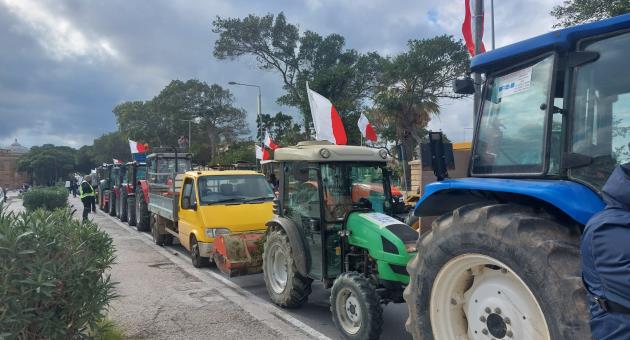
On Friday, February 2nd, Maltese farmers took to the streets in a peaceful protest, aligning themselves with their fellow farmers across Europe. A convoy of tractors stretched from Ta’ Qali to Floriana, near Valletta, Malta’s capital.
Their grievances echoed those of their European counterparts, yet with unique nuances. Prime Minister Dr. Robert Abela made an unexpected appearance amidst the assembled farmers in Floriana, dressed in farmer-like attire, perhaps aiming to portray solidarity with their struggles. While mingling with the crowd, he seemed somewhat surprised to hear certain grievances, prompting skepticism about his familiarity with the challenges faced by farmers. Among the issues raised was the inundation of imports from both EU and non-EU countries, which farmers argued tilted the playing field unfairly. They highlighted disparities in the availability of plant protection products compared to counterparts in Italy and Spain, exacerbating challenges in production. Additionally, the prevalence of Italian-speaking veterinarians within local veterinary services posed communication barriers for Maltese livestock breeders.
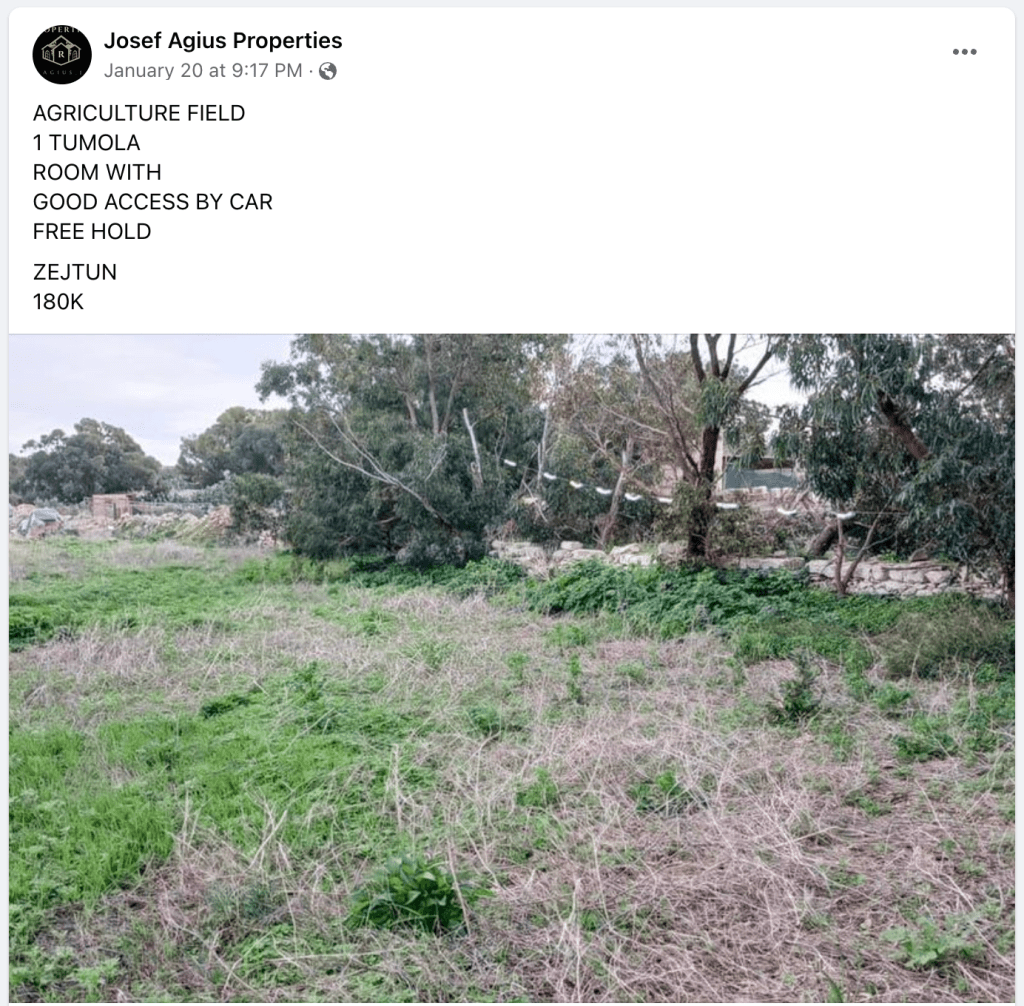
Locally, however, the looming issue revolves around land tenure issues. The soaring costs of land and encroaching urban development present significant challenges, particularly for the younger generation of farmers who aspire to enter or sustain their livelihoods in agriculture. As urban areas expand, agricultural land becomes scarcer and more expensive, making it increasingly difficult for new farmers to acquire land or for existing farmers to expand their operations. Furthermore, the issue is compounded by the allocation of state-owned agricultural land through tenders, where parcels often go to the highest bidder rather than to bona fide farmers. This practice not only drives up land prices but also limits access to land for those who are genuinely committed to agricultural production. As a result, young farmers and aspiring agricultural entrepreneurs face significant barriers to entry into the sector, hindering the rejuvenation and sustainability of the agricultural industry.
https://www.facebook.com/profile.php?id=61553633401726
What were the outcomes of these protests?
The outcomes of the protests varied across different regions and countries in Europe. In some cases, policymakers responded with concessions or adjustments to proposed policies in an effort to address farmers’ concerns. The European Commission offered exemptions or delays to certain regulations, providing temporary relief to farmers. Additionally, some national governments engaged in dialogue with farming communities to address specific grievances and work towards solutions.
However, in other instances, the protests may not have led to immediate policy changes, and the underlying issues and tensions between farmers and policymakers persist. Ultimately, the long-term impact of the protests on agricultural policies and practices in Europe may take time to unfold.
What is evident is the imperative for collective action to address food security in the future. Societal well-being and the livelihoods of farmers must take precedence over profit. Stakeholders must confront the underlying causes of agricultural challenges and collaborate towards forging a more sustainable food system.

 Jeanette Borg